What will the consequences be of the 2026 drought for nature, farming and the land around Luppitt?
Clearly, yields have been badly affected. Cereal crops ripened too early and without reaching full volume because of the dry heat, and thirsty crops have been stunted. Silage yields have dropped, and the absence of grazing means farmers have started feeding stock with conserved forage really meant for the lean winter months. On top of the dreadful wave of Bluetongue infections this year, this is making for another very difficult year for farming.
Some things are remarkably resilient however – grass in the fields can appear lifeless and brown, yet can spring back into growth within days of rain arriving. That’s partly because the growing point of grass is deep down at ground level on the plant, rather than up at the tip, so the top growth can whither without the growing point being damaged. For other plants the rooting depth is key – walk across a rough pasture and see what still looks green, and mostly it is deep-rooting plants like (ironically) docks.
Trees vary a lot in their response to drought stress. It looks like we may lose a fair number of beeches up on the plateau roadsides, because beech is a shallow-rooting tree. The oaks meanwhile have remained green, due in part to deeper roots, and also because of their waxy leaves which don’t lose moisture so quickly.
Shade is an important factor. Grass that has been mostly shaded from the intense midday sun – for example under trees or along the northern edges of tall hedges and woodlands – has mostly remained green throughout the drought.
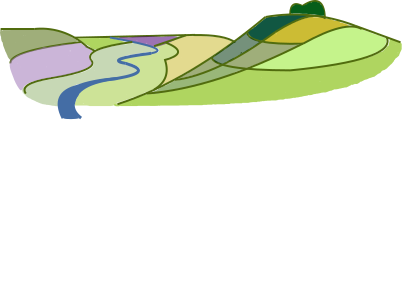
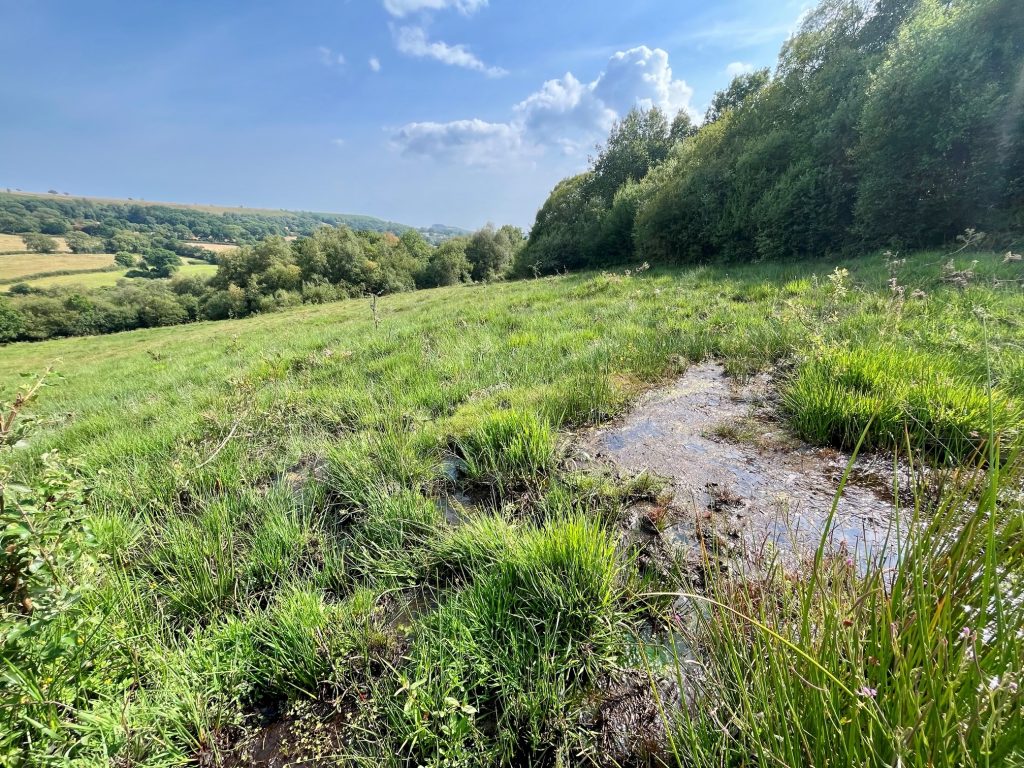
Soils vary a lot in how vulnerable they are to drought. Sandier soils retain less moisture, as do soils with lower levels of organic matter. And soils lying close to or just below the springline remain moist even at the driest times – just walk across Hense Moor and compare the vegetation low down on the boggier slopes, with the vegetation on the greensand higher up.
The river itself has been low, and the heated water carries less oxygen, causing stress for fish and increasing algal growth. But the springs and streams that feed it have continued to flow. That’s because the aquifer deep in the Greensand goes on releasing water from deep down – water which may have last fallen as rain on the surface many years ago.
Once the drought breaks, there will be much talk about lessons learned and needs for the future. What is clear is that this summer is not a freak. These extremes of dryness – and wetness in the winter – are set to become more common, fuelled by climate change. While the urgency of addressing the causes of climate change gets stronger and stronger (whether acted upon by our politicians or not), the need to adapt to the change which is already baked-in (excuse the pun) is similarly inescapable.
That adaptation is partly about improving water storage, reducing leaks and wastage and treating water like the precious resource it really is. But it is also about understanding how our land and wild nature behave with respect to water, and helping the land to help us.
That means enabling naturally-moist soils to retain more water, improving the health and structure of productive soils to enable them to absorb more water, slowing the flow in ditches and streams to keep water in the landscape and prevent downstream floods (including welcoming the work of beavers and their dams), and using trees and other vegetation to provide shade and reduce evaporation.
The aptitude and wit to do these things is already there, within the Luppitt community. And if we succeed in our current negotiation to secure Landscape Recovery support for Luppitt, the resources will become available to us, too.